Why the Spring Time Change Wrecks My Anxiety (And What Helps)

If you're reading this and feeling off — like your body is running an hour behind while the world has moved ahead — I want you to know this is real, and you're not imagining it.
The spring time change messes with me every single year. It's not "just an hour." It's a disruption to the fragile sleep routine that keeps my anxiety manageable. And if you're feeling more anxious than usual this week, that lost hour might be why.
Why the Time Change Hits Anxious Brains Harder
Here's what happens to me, and what research confirms happens to many people with anxiety:
Your circadian rhythm is thrown off. That internal clock that tells you when to sleep and wake? It doesn't adjust instantly. For people with anxiety, circadian disruption can trigger a cascade effect — poor sleep leads to heightened anxiety, which leads to worse sleep, and suddenly you're in a loop.
Morning cortisol spikes feel worse. That natural stress hormone surge in the morning? When you lose an hour of sleep, it hits harder. I've had panic attacks on DST week that felt like they came from nowhere, until I connected the dots.
Social jetlag is real. Your body thinks it's 8 AM when the clock says 9. You're forcing yourself to function before your brain is ready. For anxious people who already dread mornings, this is extra rough.
What I'm Doing This Week (And What Might Help You)
I don't have a magic fix. But I have a "get through the week" plan that I've refined over years of this:
Go to bed 15 minutes earlier each night. Don't try to force the full hour at once. I'm doing 15 minutes earlier for four nights. It's not perfect, but it's gentler on my system.
Morning light, immediately. I open my curtains the second I wake up. Natural light helps reset your circadian clock faster. If it's still dark when you wake up, a light therapy lamp can help (I have one I use in winter anyway).
Lower the bar. This is not the week to start new projects, have difficult conversations, or push yourself extra hard. I'm giving myself permission to be a bit slower this week. You can too.
Watch the caffeine. When I'm tired, I reach for coffee. But anxious brains + extra caffeine + circadian disruption = disaster. I'm limiting myself to one cup, before noon.
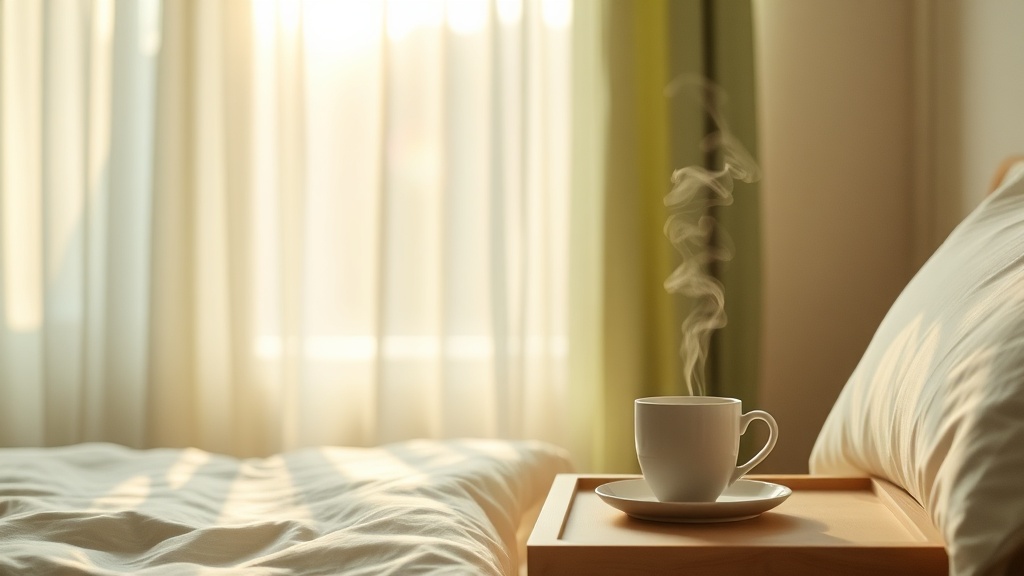
The 20-minute rule. If I'm lying in bed anxious at night, I get up after 20 minutes. I make chamomile tea (yes, always the tea), sit in dim light, and read something boring. No scrolling. No forcing sleep. Just... waiting with myself until sleep comes back.
Be Patient With Your Brain
It takes most people several days to adjust to the time change. For those of us with anxiety, it might take a week or more. That's not weakness — it's biology.
If you notice your anxiety is worse this week, don't panic. Don't assume something is seriously wrong. Ask yourself: did I lose an hour of sleep recently? Is my body still catching up?
The answer is probably yes. And it will pass.
When This Isn't Just the Time Change
I want to be honest: sometimes what feels like "just the time change" is masking something that needs attention. If your anxiety:
- Persists beyond two weeks after the time change
- Gets significantly worse or includes thoughts of self-harm
- Makes it impossible to work, eat, or function
- Comes with new physical symptoms you haven't had before
...that's worth talking to a professional about. The time change might have been a trigger, but there could be more going on.
You're Not Broken
I used to think I was "extra sensitive" because the time change wrecked me. Like everyone else handled it fine and I was just... broken somehow.
I'm not. Neither are you.
Anxiety makes us more sensitive to changes in sleep, routine, and environment. That's not a character flaw. It's how our brains are wired. The time change is an external disruption, and we're responding to it.
Be gentle with yourself this week. Go to bed early. Drink your tea. Let yourself move a little slower. Spring is coming, and your body will adjust.
You're not alone in this.
I'm not a therapist or medical professional. Everything I share comes from my own experience with anxiety and what I've learned along the way. This is not medical advice. If you're struggling, please reach out to a mental health professional. If you're in crisis, contact the 988 Suicide and Crisis Lifeline (call or text 988) or the Crisis Text Line (text HOME to 741741).