When the House Goes Quiet: Why Your Brain Starts Racing at Bedtime

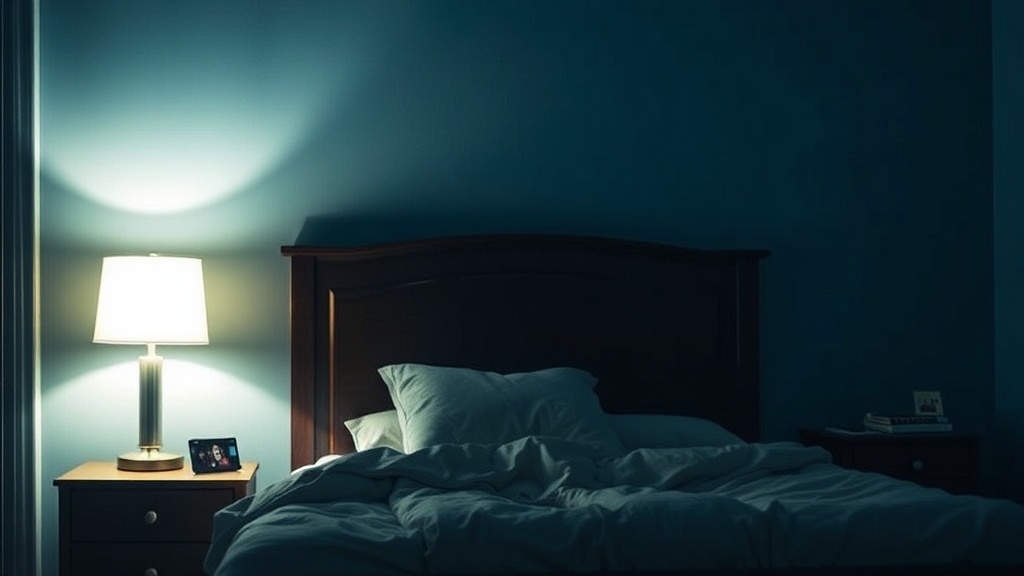
You’re finally tucked under the covers, the lights are off, and the house is still. It’s the moment you’ve been waiting for all day—except your brain decides this is the perfect time to review every awkward interaction you had at the grocery store or wonder if you left the oven on (you checked it three times already). This spike in nighttime worry isn't just a personal quirk; it's a common struggle where the lack of daytime distractions leaves a vacuum for anxious thoughts to fill. We’re going to look at why this happens and how you can actually get some rest without your mind running a marathon.
Why does anxiety feel worse at night?
Think about your average Tuesday. Between the morning coffee, the work emails, the commute, and deciding what to have for dinner, your brain is busy. It's constantly processing external information, which acts as a sort of shield against the deeper worries that might be simmering in the background. But once you turn off the TV and put down your phone, that shield disappears. In the sudden silence, your mind starts looking for something to do. Often, it decides to play a highlight reel of your biggest insecurities or a slideshow of potential disasters. This is what some call the "quiet vacuum." Without the noise of the day to drown them out, anxious thoughts become much louder and more persistent.
There's also a biological side to this. Our bodies follow a circadian rhythm—a natural internal clock that regulates sleep and wake cycles. For many of us living with anxiety, our stress hormones like cortisol don't always follow the rules. Instead of dropping off as the sun goes down, they might stay high or spike at odd hours. When your body is pumped full of "alert" signals but you're trying to lie still in a dark room, it creates a massive disconnect. Your heart is thumping and your muscles are tight because your system thinks there's a threat, even though the only thing in the room is a pile of laundry in the corner. You can find more about how sleep and mental health interact at the Sleep Foundation.
The silence of the night can be deafening. During the day, we have the white noise of traffic, the hum of the refrigerator, or the sound of people talking. When all of that disappears, the internal dialogue becomes the loudest thing in the room. This is especially true for those of us who have spent years managing generalized anxiety. Our brains are conditioned to scan for threats. When there are no external threats to find, the brain turns inward and starts scanning our memories and our future plans for anything that might go wrong. It’s like a radar system that’s still running at full power even though the skies are clear. Understanding that this is just a function of an overactive protection system can help you view those thoughts with a bit more distance.
What can I do when my heart starts racing in bed?
When you feel that familiar flutter in your chest or a sudden tightness in your throat while you're trying to drift off, the first instinct is often to panic about the panic. You start thinking about how tired you'll be tomorrow or how unfair it is that you can't just rest like everyone else. I’ve been there—lying in my apartment in Minneapolis, watching the shadows on the wall, feeling like my heart was trying to run a race without me. One of the most helpful things you can do in that moment is to stop trying to force yourself to be calm. Instead, try to notice the physical sensations without judging them. It sounds counterintuitive, but acknowledging that your heart is just doing its job (even if it's overreacting) can take some of the power away from the fear.
Instead of fighting the physical energy, give it a place to go. You might try clenching every muscle in your body as hard as you can for five seconds and then letting go all at once. It's a way to burn off some of that nervous energy so your body can finally settle. Try following these steps while lying on your back:
- Clench your toes and hold for five seconds.
- Tense your calf muscles and hold.
- Squeeze your thighs and glutes.
- Make a fist with both hands.
- Shrug your shoulders up to your ears.
This isn't a magical fix that will put you to sleep instantly, but it helps release some of that built-up tension that's keeping you on high alert. It's also important to remember that your body is capable of handling these sensations. Even though it feels scary, a racing heart from anxiety isn't dangerous. For a deeper look at managing these physical symptoms, the National Institute of Mental Health offers resources on understanding how anxiety affects the body.
How do I stop my brain from overthinking at 2 AM?
If your mind is stuck in a loop of "what-ifs," one of the best tools I’ve found is the brain dump. I keep a plain notebook and a pen on my nightstand specifically for this. When I can't stop thinking about a task I forgot or a worry that won't leave me alone, I turn on a very dim light and write it down. I don't worry about grammar or making sense; I just get the thoughts out of my head and onto the paper. It’s a way of telling my brain, "I’ve seen this, I’ve recorded it, and we can deal with it when the sun comes up." It acts like a temporary storage unit for your worries so you don't have to carry them through the night.
The act of writing things down is more than just a memory aid. It’s a psychological shift. When a thought stays in your head, it’s fluid—it can morph, grow, and loop back on itself indefinitely. But when you write it down, it becomes static. It’s fixed on the page. You can see it for what it is. Often, a worry that feels like a massive mountain at 3 AM looks a lot like a small, manageable hill once it’s written in ink. It gives you a sense of control over the chaos. Plus, it prevents the "don't forget this" loop that often keeps us awake. Your brain keeps repeating the worry because it’s afraid you’ll lose the information. Once it’s on the paper, the brain can finally let go.
Another rule I try to live by is the 20-minute rule. If I’ve been lying in bed for what feels like twenty minutes and I’m still wide awake and worrying, I get up. Staying in bed while you're anxious can actually train your brain to associate the mattress with stress rather than sleep. I'll go into the living room, keep the lights low, and do something incredibly boring—like folding socks or reading a book I've already finished. I might make a cup of Somali tea (shaah) with just a bit of ginger to soothe my stomach, but I avoid caffeine or anything too stimulating. It reminds me of my mom’s kitchen and helps me feel grounded. Once I feel that heavy-eyed sensation starting to return, then and only then do I go back to bed. This helps break the cycle of nighttime dread and keeps your sleep space as a place for rest. You can read more about why this approach is recommended by experts at the Mayo Clinic.
We also have to talk about the blue light elephant in the room. Most of us reach for our phones the second we feel a pang of anxiety at night. It’s a natural reflex—we want to scroll away the discomfort. But the light from our screens actually tells our brain to stop producing melatonin, the hormone that helps us sleep. Plus, the content we consume is rarely calming. Whether it's a news update or a photo of someone else’s life, it keeps our brains in an active, comparative mode. I’ve made it a rule to keep my phone on the other side of the room. If I really need noise, I’ll put on a quiet podcast or a white noise machine, but I keep the screen out of sight. It’s a small change that helps your brain realize the day is actually over.
One way to reduce the intensity of these nighttime visits is to schedule a "worry window" during the day. It sounds silly, but giving yourself fifteen minutes at 4 PM to sit down and consciously think about everything that’s bothering you can actually help. When a worry pops up at midnight, you can tell yourself, "I’ve already handled this during my worry time, and I’ll look at it again tomorrow." This creates a boundary between your waking life and your sleep life. It’s about teaching your brain that there’s a time and a place for problem-solving, and the pillow isn't it. By building these habits, you’re slowly reclaiming your nights and reminding yourself that even though anxiety is a part of your life, it doesn’t have to be the boss of your sleep.
Lastly, it helps to be kind to yourself during these midnight hours. When you’re the only one awake, it’s easy to feel broken or alone. But so many of us are staring at the same moon, dealing with the same racing thoughts. You aren't doing anything wrong, and your brain is just trying to protect you—it’s just a bit confused about the timing. Sometimes, just putting a hand on your chest and saying, "This is hard right now, but I'm okay," can be the tiny bit of comfort that lets your nervous system finally settle down. We don't have to be perfect at sleeping; we just have to be gentle with ourselves while we try to find our way there.