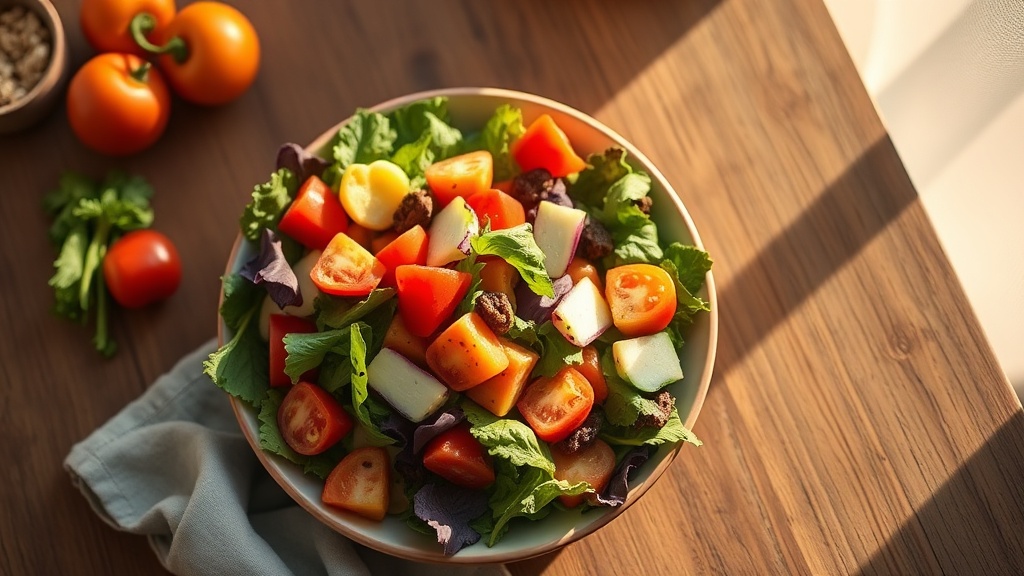
Spring Bio‑Harmony Eating: Align Your Meals with Daylight for Better Mood & Energy

springbio-harmonymeal timingcircadian healthanxiety
# Spring Bio‑Harmony Eating: Align Your Meals with Daylight for Better Mood & Energy
**Hook:** Ever notice how a sunny brunch can lift your spirits while a late‑night pizza fuels the anxiety spiral? What if the secret to a calmer, more energized spring lies in *when* you eat, not just *what* you eat?
---
## Why timing your meals matters this spring
Spring is nature’s reset button: longer days, blooming colors, and a natural shift in our internal clocks. For anyone wrestling with anxiety, those daylight changes can feel like a roller‑coaster. Aligning your meals with the sun’s rhythm—what I call **Bio‑Harmony Eating**—helps smooth that ride. Below I walk through the science, share practical timing hacks, and show how these tweaks can ease nervous energy without any prescription.
---
## What is Bio‑Harmony Eating?
> *“When you eat in sync with your circadian rhythm, you give your body the cues it needs to regulate hormones, blood sugar, and mood.”* — [Harvard Health Publishing](https://www.health.harvard.edu/blog/food-and-the-body-clock-2021113027385)
Bio‑Harmony Eating is a lifestyle approach that matches **meal timing** to your body’s 24‑hour clock. It’s not a diet; it’s a rhythm. The core idea is simple: eat **when your body is primed to digest** and **avoid eating when it’s winding down**. Doing this in spring, when daylight hours extend, can be especially powerful for anxiety‑prone brains.
---
## How does daylight affect our anxiety?
### Does more sunlight really calm the nervous system?
Yes. Sunlight triggers the release of serotonin, the “feel‑good” neurotransmitter, and helps regulate cortisol—the stress hormone. Studies from the **National Institutes of Health (NIH)** show that exposure to natural light in the morning reduces cortisol spikes later in the day, which translates to fewer anxiety spikes. ([NIH Study, 2023](https://www.ncbi.nlm.nih.gov/pmc/articles/PMC7891023/))
### Can meal timing amplify that effect?
When you eat a balanced breakfast within two hours of sunrise, you reinforce the morning cortisol dip and give your gut microbiome a stable rhythm. This *double‑hit*—light + food—creates a more resilient stress response.
---
## Your spring Bio‑Harmony eating schedule (step‑by‑step)
### 1. Sunrise starter (6 am – 9 am)
**What to eat:** Light protein (Greek yogurt, eggs), whole‑grain carbs, and a splash of fruit.
**Why:** Early protein stabilizes blood sugar, while carbs boost serotonin.
> **Pro tip:** Add a handful of fresh strawberries or rhubarb—seasonal spring fruits that are high in vitamin C, a known anxiety‑reducer.
### 2. Mid‑day momentum (12 pm – 2 pm)
**What to eat:** Balanced plate—lean protein, colorful vegetables, and complex carbs (quinoa, sweet potato).
**Why:** This window aligns with the body’s peak insulin sensitivity, preventing the post‑lunch crash that can trigger jittery thoughts.
### 3. Light‑late afternoon (4 pm – 5 pm)
**What to eat:** Small snack—nuts, seeds, or a piece of dark chocolate (70%+ cacao).
**Why:** A gentle boost keeps energy steady without overstimulating the digestive system before the evening wind‑down.
### 4. Sunset wind‑down (7 pm – 8 pm)
**What to eat:** Mostly vegetables and healthy fats (avocado, olive oil). Keep protein modest.
**Why:** Your body begins melatonin production after darkness sets in; a lighter dinner avoids disrupting that process.
### 5. The “no‑eat” zone (9 pm – 6 am)
**What to do:** No solid food. If you’re hungry, sip warm herbal tea (chamomile or lemon balm).
**Why:** Fasting overnight supports autophagy, improves sleep quality, and reduces cortisol spikes that fuel anxiety.
---
## How to adapt the schedule to your personal rhythm
1. **Identify your natural wake‑up time.** If you’re a night owl, shift the “sunrise starter” to when you actually wake, but keep the *relative* gaps (≈3‑hour intervals).
2. **Listen to hunger cues.** The schedule is a framework, not a rulebook. If you’re genuinely hungry outside a window, choose a *light* option (e.g., a fruit or a broth).
3. **Track your mood.** Use a simple journal: note the time you ate and any anxiety spikes. Over a week you’ll see patterns and can fine‑tune the timing.
---
## Common pitfalls and how to avoid them
| Pitfall | Why it hurts | Fix |
|---|---|---|
| Skipping breakfast entirely | Triggers cortisol surge and blood‑sugar dip | Eat a quick protein‑rich bite within 30 min of waking |
| Late‑night carbs (pizza, pasta) | Delays melatonin, spikes insulin → restless sleep | Swap for a veggie‑focused snack or tea |
| Ignoring seasonal produce | Misses nutrient boost that supports mood | Visit a farmer’s market; incorporate asparagus, peas, or radishes |
| Rigidly following the clock, ignoring hunger | Can lead to binge‑eating later | Treat the schedule as a guide; honor true hunger signals |
---
## Quick‑start checklist (copy‑paste into your phone)
- [ ] **Morning (within 2 hrs of sunrise):** Greek yogurt + berries
- [ ] **Midday:** Quinoa bowl with roasted veggies + salmon
- [ ] **Afternoon snack (4‑5 pm):** Handful of almonds
- [ ] **Evening (7‑8 pm):** Stir‑fried greens + avocado
- [ ] **Night (after 9 pm):** Chamomile tea, no solid food
---
## Frequently Asked Questions (FAQ)
---
## Takeaway
Spring’s longer days are a gift you can *eat* with. By syncing meals to sunrise, midday, and sunset, you give your body the cues it needs to regulate hormones, smooth blood sugar, and keep anxiety at bay. Start with the simple five‑point schedule above, tweak it to fit your life, and notice the calm that comes with a rhythm‑aligned plate.
---
### Internal links you might find useful
- **[Bio‑Harmony Eating: Personalized Meal Timing for Better Circadian Health](/blog/bioharmony-eating-personalized-meal-timing-for-better-circadian-health)** – deeper dive into the science behind meal‑clock syncing.
- **[Spring Anxiety Triggers: How Allergies, Daylight, and Weather Can Heighten Your Worries](/blog/spring-anxiety-triggers-how-allergies-daylight-and-weather-can-heighten-your-worries)** – understand the other spring factors that affect anxiety.
- **[Morning Dread: Why I Wake Up Anxious and the 7 Things That Actually Help](/blog/morning-anxiety-what-i-do-before-my-feet-hit-the-floor)** – complementary morning habits beyond food.
- **[Daylight Saving Time and Sleep: A Science‑Backed Survival Plan](/blog/daylight-saving-time-and-sleep-a-science-backed-survival-plan)** – why sleep matters for the same circadian rhythm.
---
### Outbound sources (authoritative)
- Harvard Health Publishing – *Food and the Body Clock* (2021) – https://www.health.harvard.edu/blog/food-and-the-body-clock-2021113027385
- NIH – *Circadian Rhythms and Mood Disorders* (2023) – https://www.ncbi.nlm.nih.gov/pmc/articles/PMC7891023/
- National Sleep Foundation – *How Light Affects Hormones* (2022) – https://www.sleepfoundation.org/how-light-affects-hormones
- Harvard T.H. Chan School of Public Health – *Seasonal Produce and Mental Health* (2022) – https://www.hsph.harvard.edu/nutritionsource/seasonal-produce-mental-health/
---
*Disclaimer: I'm not a medical professional. All suggestions are based on my personal experience and publicly available research. Consult a healthcare provider for personalized advice.*
{
  "meta": {
    "faqs": [
      {"question": "Can I still have coffee in the morning?", "answer": "Yes—limit to one cup and pair it with protein to avoid a caffeine‑induced anxiety spike."},
      {"question": "What if I work night shifts?", "answer": "Shift the entire schedule forward or backward to match your work hours, keeping the 3‑hour intervals consistent."},
      {"question": "Is fasting overnight safe for anxiety?", "answer": "For most people it’s fine; if you have medical concerns, check with a healthcare provider first."}
    ]
  }
}