Morning Dread: Why I Wake Up Anxious and the 7 Things That Actually Help

I wake up most mornings with my stomach already clenched. Before I open my eyes, before I check my phone, before anything has actually gone wrong — my body has decided that today is dangerous.
It's not a thought. It's more like waking up inside a feeling that was already waiting for me. Like my nervous system got a head start while I was sleeping.
I'm Noor, and I've had generalized anxiety disorder since I was fifteen. Morning dread — that heavy, buzzing feeling that hits before your feet even touch the floor — has been one of the most persistent parts of it. And for a long time, I didn't even realize it wasn't normal. I thought everyone woke up like that.
They don't.
Why mornings hit different when you have anxiety
There's actually a biological reason for this, which made me feel slightly less broken when I learned about it. It's called the cortisol awakening response — basically, your body floods you with cortisol in the first 30 to 45 minutes after you wake up. Cortisol is the stress hormone. For most people, this spike helps them get moving. For people with anxiety disorders, it can feel like being dropped straight into fight-or-flight before you've even had water.
Add to that: low blood sugar from not eating all night, a brain that immediately starts listing everything that could go wrong today, and whatever you didn't process from yesterday still sitting in your chest. It's a lot.
My therapist explained it like this: your nervous system doesn't have a calendar. It doesn't know it's just Tuesday and all you have to do is go to work and buy groceries. It just knows cortisol is high, and it responds the way it's been trained to respond — by sounding the alarm.
What my mornings used to look like
Before I figured out what was happening, my mornings were a mess. I'd wake up with that tight feeling in my chest, immediately grab my phone, scroll through notifications and news, feel worse, lie in bed for another 40 minutes arguing with myself about whether I could call in sick, eventually get up in a rush, skip breakfast, and arrive at my day already exhausted.
The phone part was the worst. I was feeding my anxious brain exactly what it wanted — proof that things were bad. Every notification felt like a demand. Every news headline confirmed that the world was falling apart. I was basically pouring gasoline on a fire I didn't even know was burning.
The 7 things I actually do now
I want to be honest: I don't do all of these every single day. Some mornings I still lie there staring at the ceiling, waiting for my body to calm down. But on the days I manage to do even three or four of these, the difference is real.
1. I don't touch my phone for the first 15 minutes
This was the hardest habit to build and the one that made the biggest difference. My phone stays face-down on the nightstand, and I don't pick it up until I've been awake for at least 15 minutes. No texts, no email, no Instagram, no news.
Those first minutes are when my brain is most vulnerable. Giving it silence instead of stimulation lets the cortisol spike settle without adding fuel.
2. I put my feet on the floor and say one sentence
This sounds silly, but it works for me. When I sit up in bed, I put both feet flat on the floor and say — out loud or in my head — "I don't have to solve today. I just have to start it."
That sentence pulls me out of the spiral of trying to pre-solve every problem the day might throw at me. I stole this idea from my CBT sessions, where my therapist kept reminding me that anxiety lives in the future, not the present.
3. Water before anything else
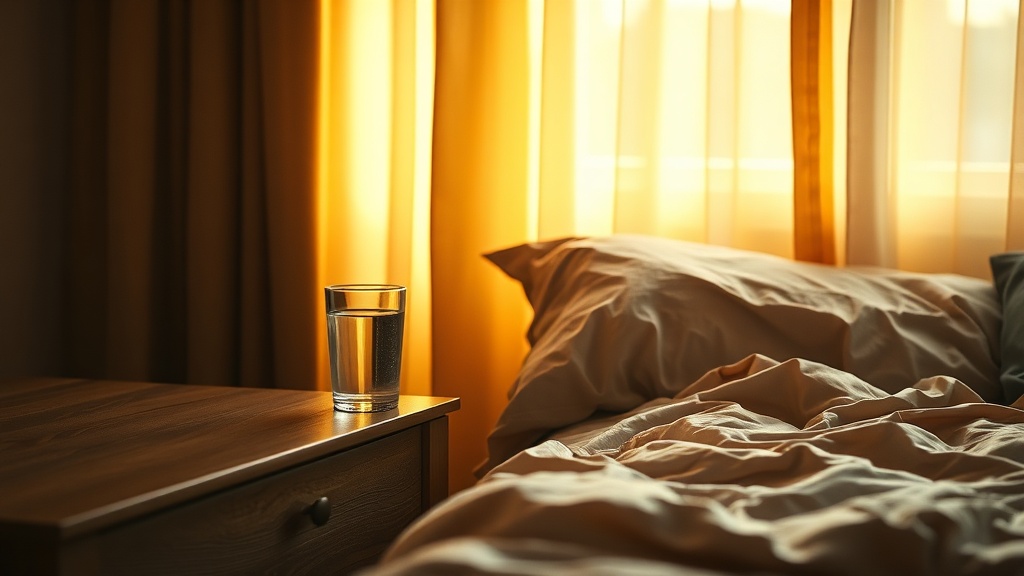
I keep a glass of water on my nightstand. Before I stand up, I drink most of it. Dehydration after eight hours of sleep makes anxiety symptoms worse — the lightheadedness, the racing heart, the foggy feeling. Water doesn't fix anxiety, but it takes one physical symptom off the pile.
4. I eat something boring within 30 minutes
I don't mean boring as an insult. I mean predictable. I have oatmeal with banana and almonds almost every morning. I don't have to think about it, I don't have to decide, and it stabilizes my blood sugar fast. Low blood sugar mimics anxiety symptoms — sweating, shakiness, irritability — so eating early genuinely helps.
On my worst mornings, it's just toast with peanut butter. The bar is low. The point is eating.
5. A 10-minute walk, even if it's just around the block
I don't run. I don't do intense exercise in the morning because that makes my anxiety worse, not better. But a short, slow walk — even in the cold Minneapolis winter — does something to my nervous system that nothing else replicates. Something about moving my body and being outside breaks the loop.
On days when it's too cold or I truly cannot get out the door, I stand on my apartment balcony for two minutes. Fresh air, different view than my ceiling. That's enough.
6. I name the feeling without trying to fix it
This one came from therapy. When the dread is sitting heavy, I try to just name it: "I'm feeling morning anxiety. My body is doing its cortisol thing. This will peak and then settle." I don't try to talk myself out of it or force positivity. I just acknowledge that it's happening and that it's temporary.
Trying to fight morning anxiety makes it louder. Acknowledging it takes some of its power away. Not all of it — but some.
7. I have a "first task" that requires almost nothing
My therapist calls this a "low-bar win." I have one thing I do every morning that is so easy it barely counts — I water my plant. That's it. One plant, one cup of water. But doing it gives my brain evidence that I can take action today. It interrupts the "I can't do anything" narrative that morning anxiety loves to run.
On really bad mornings, my first task is making my bed. Not well. Just pulling the blanket up. Done. I did a thing.
What I've stopped doing
Equally important is what I've cut from my mornings:
- Checking email in bed. Every email feels urgent at 6 AM when your cortisol is spiking. None of them actually are.
- Reading the news first thing. I still read news, just not in my first hour. My anxious brain doesn't need global problems added to its list before breakfast.
- Telling myself "just don't be anxious." If that worked, I wouldn't have GAD. Willpower doesn't override neurochemistry.
- Comparing my mornings to other people's. My roommate wakes up singing. Literally singing. I wake up with my jaw clenched. We're different organisms, and that's fine.
The days it doesn't work
I want to be real: some mornings, nothing works. The dread is too heavy, the cortisol is too much, and I lie there for an hour before I can move. On those days, I try not to punish myself for it. Anxiety is not a discipline problem. It's a nervous system problem. Having a bad morning doesn't erase the progress of all the decent ones.
My therapist reminds me that consistency doesn't mean perfection. It means returning to the routine after it breaks. That distinction has saved me from the shame spiral more times than I can count.
When morning anxiety might need more than a routine
If your morning dread is so intense that you regularly can't get out of bed, can't eat, can't function — that's worth talking to someone about. I take medication daily for my anxiety, and it's one of the reasons my mornings went from unbearable to manageable. A routine helps, but for some of us, it's not enough on its own, and there's no shame in that.
Resources I trust:
If you're in crisis: call or text 988 (Suicide & Crisis Lifeline) or text HOME to 741741 (Crisis Text Line).
One last thing
Morning anxiety made me feel like I was failing at the most basic part of being a person — just waking up. It took me a long time to understand that it wasn't a character flaw. It was cortisol and a nervous system that learned to be afraid.
If you wake up every morning feeling like something is wrong before anything has happened, you're not dramatic. You're not lazy. Your body is doing a thing it was trained to do, and you can, slowly, teach it something different.
Not by being tough. By being patient. And by drinking your water.
Disclaimer: I'm not a therapist or medical professional. Everything I share here comes from my own experience living with generalized anxiety disorder. This is not medical advice. If your symptoms are severe or you're in crisis, please reach out to a professional or contact 988 (call/text) or text HOME to 741741.